


Home page » Hypothyroidism: what is hypothyroidism and how to interpret a thyroid panel?
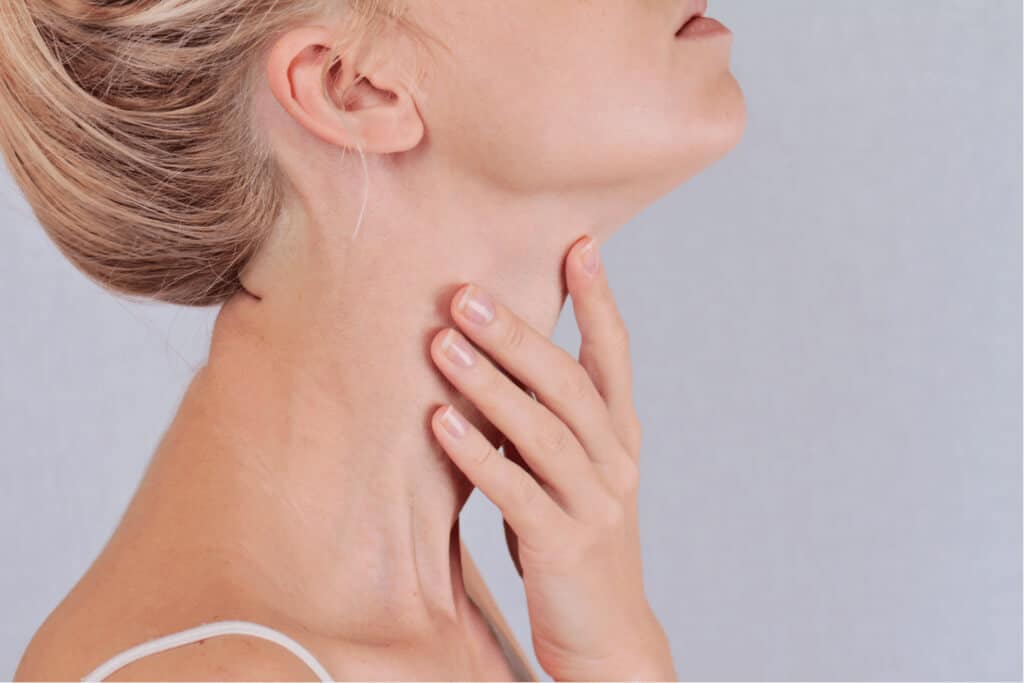
Thyroid diseases affect up to 10% of the population in Spain, with hypothyroidism and sick euthyroid syndrome standing out for their direct impact on the quality of life of those affected. It is essential to understand how this endocrine system is regulated and to know the therapeutic options available to make informed decisions together with your doctor. A blood test may reveal previously undetected thyroid problems.
In this article you will discover:
The thyroid is an endocrine gland located in the anterior and lower part of the neck, responsible for producing and secreting thyroid hormones and maintaining iodine homeostasis. Under normal conditions, the thyroid is under the control of the hypothalamus-pituitary axis (TRH -> TSH -> thyroid gland) and produces two types of hormones:
T4, which is inactive, is converted to active T3 hormone in peripheral tissues or, alternatively, to inactive T3 (known as «reverse T3» or T3r). A proper balance of thyroid hormones is crucial for proper metabolic function. T3 plays an essential role in regulating the activity of virtually every nucleated cell in the body.
In nutrition, the thyroid is often mentioned in relation to the control of basal metabolic rate (BMR), which involves increased consumption and oxidation of glucose and fatty acids, which can lead to weight loss.
It is a common myth that hypothyroidism directly causes weight gain. According to the scientific literature, reduced thyroid function may predispose to weight gain due to decreased metabolic rate and physical activity, but this is not the case under conditions of calorie balance (adequate calorie intake to maintain weight).
Thyroid hormones have other lesser-known functions, such as control of cardiac output and resting heart rate, regulation of resting respiratory rate and oxygen supply to tissues, postnatal bone development and remodelling, stimulation of the nervous system, alertness and wakefulness, reproductive health, regulating the ovulatory cycle and spermatogenesis, and regulation of other endocrine organs and pituitary function.
Hypothyroidism is a condition that generally requires drug treatment. However, it is also crucial to consider the «sick euthyroid syndrome».» or non-thyroidal systemic disease. This syndrome, which lies between an adaptive physiological response and a possible pathology, poses a challenge in the clinical setting due to the absence of established treatment protocols. In this context, the intervention of an endocrinologist with experience in various therapeutic approaches may be necessary.
The sick euthyroid syndrome is characterised by alterations in thyroid hormone levels in the blood without direct damage to the thyroid gland. The causes are usually related to physiological stress, severe illness or major trauma.
In laboratory tests, a steady decrease in the production of active T3, due to inhibition of the conversion of T4 to T3, is observed together with an increase in reverse T3, which is inactive. Although this situation may resemble central hypothyroidism, a detailed clinical diagnosis is essential to differentiate between the two.
In more severe cases, total T4 levels may be normal or low, and TSH may be normal or low. This is in contrast to true hypothyroidism, where a significant increase in TSH is typically observed., which is a key diagnostic indicator.
Although not all possible causes of sick euthyroid syndrome are addressed, such as those associated with patients in intensive care units (ICU), severe trauma, myocardial infarction, chronic renal failure, diabetic ketoacidosis, cirrhosis, severe burns and sepsis, it is important to mention conditions such as starvation, anorexia nervosa and calorie-protein malnutrition, which can occur outside hospital settings.
The therapeutic approach in sick euthyroid syndrome focuses on treating the underlying cause, with thyroid hormone replacement not recommended. In patients with a mildly elevated TSH, monitoring over time is essential to detect the possible development of overt hypothyroidism.
A complete thyroid hormone analysis provides the necessary information for proper diagnosis and monitoring. If a problem is detected and corrective action is taken, it is advisable to repeat thyroid function tests in six to twelve months. You can take an Ailin test to find out your thyroid profile..
It is important to remember that drastic and prolonged weight loss, caused by extreme calorie reduction, will cause a decrease in active T3 levels. This is a physiological response that seeks to conserve energy by reducing unnecessary heat production and decreasing involuntary physical activity, which slows metabolism. Once a normocaloric diet is reintroduced, T3 levels tend to normalise rapidly.
During short intermittent fasts (less than 24 hours), such as those observed in religious practices like Ramadan, significant alterations in thyroid hormones do not usually occur. However, in cases of prolonged fasting or diets with considerable calorie restriction to treat overweight, it is essential to assess the benefits of weight loss along with possible complications, always under the supervision of a physician.
In hypothyroidism, there is a lack of thyroid hormone action in body tissues. The causes may be in the thyroid itself (primary hypothyroidism), in 95% of cases, while the remaining 5% are of pituitary or hypothalamic origin.
Globally, the most common cause is the iodine deficiency, although the WHO considers Spain to be a country with adequate intake.
However, in our environment, the most frequent cause is autoimmune. (Hashimoto's thyroiditis).
If you are taking drugs such as lithium, amiodarone, anti-thyroid or tyrosine kinase inhibitors, It is important to consider these as possible secondary causes of hypothyroidism.
In adults, symptoms appear slowly and progressively, starting with fatigue, lethargy, constipation, cold intolerance, myopathy, carpal tunnel syndrome and menstrual disorders, as well as weight gain, dry and rough skin, deep voice and possible sleep apnoea.
As the symptoms are non-specific, the diagnosis is based on laboratory tests. However, for a differential diagnosis, it may be necessary to determine the presence of anti-thyroid peroxidase (anti-TPO) and anti-thyroglobulin (anti-TG) antibodies, which are positive in 90-100% of autoimmune thyroiditis.
Attached is a summary of the alterations in the thyroid panel of the different thyroid diseases.
| Hormone | Reference | Units |
|---|---|---|
| TSH | 0.4 - 4.0 | mIU/L (thousand international units per litre) |
| T3 (Triiodothyronine) | 100 - 200 | ng/dL (nanograms per decilitre) |
| T4 (Thyroxine) Total | 5.0 - 12.0 | µg/dL (micrograms per decilitre) |
| T4 Free | 0.8 - 2.0 | ng/dL (nanograms per decilitre) |
| T3 Reverse (rT3) | 10 - 24 | ng/dL (nanograms per decilitre) |
Check the status of your thyroid function.
Treatment of hypothyroidism usually involves supplementation with levothyroxine, a synthetic thyroid hormone that replaces T4. It is essential to take this medication at the same time each day, preferably on an empty stomach, to ensure optimal absorption. Avoid intake of foods rich in calcium, iron or soya. in the hours around the time of taking the medicine and cruciferous vegetables in large quantities, as they can interfere with its absorption. Maintaining a regular exercise routine helps to improve metabolism and combat fatigue. Managing stress through relaxation techniques, such as yoga or meditation, is essential, as chronic stress can aggravate the symptoms of hypothyroidism.
NOTE: This article is based on the literature sources listed below and has been reviewed by Ailin. While the content is accurate as of the date of publication, it may not reflect recent developments. This blog is for informational purposes only and should not be considered as a practice of Medicine, Nursing or other professional health services, including medical advice, and therefore does not establish a doctor-patient relationship. Use of the information or resources linked from this blog is at the user's own risk. This content is not intended to replace medical advice, diagnosis or treatment. Links to websites may be unavailable for reasons beyond our control; please let us know if you find any inactive references so that we can fix them.
Hughes K, Eastman C. Thyroid disease: Long-term management of hyperthyroidism and hypothyroidism. Aust J Gen Pract. 2021 Jan-Feb;50(1-2):36-42. doi: 10.31128/AJGP-09-20-5653. PMID: 33543160.
Welsh KJ, Soldin SJ. DIAGNOSIS OF ENDOCRINE DISEASE: How reliable are free thyroid and total T3 hormone assays? Eur J Endocrinol. 2016 Dec;175(6):R255-R263. doi: 10.1530/EJE-16-0193. PMID: 27737898; PMCID: PMC5113291.
Sapin R, Schlienger JL. Dosages de thyroxine (T4) et tri-iodothyronine (T3): techniques et place dans le bilan thyroïdien fonctionnel [Thyroxine (T4) and tri-iodothyronine (T3) determinations: techniques and value in the assessment of thyroid function]. Ann Biol Clin (Paris). 2003 Jul-Aug;61(4):411-20. French. PMID: 12915350.
.