





69,99 € — or subscribe to save up to 10%
69,99 € — or subscribe to save up to 10%
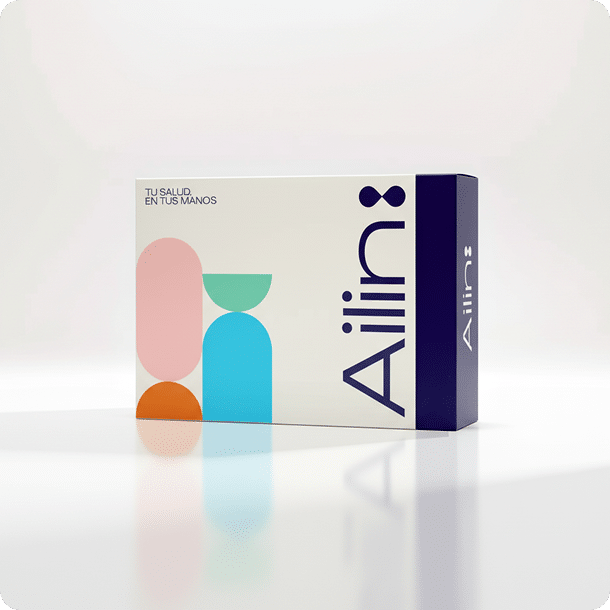
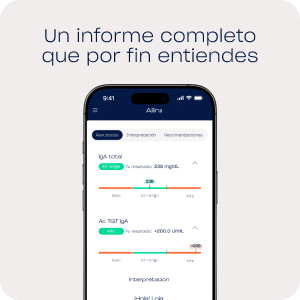
The coeliac condition test analyses the main antibodies associated with coeliac disease. Its detection helps to identify possible coeliac disease and to assess the need for further medical testing.
Do you want to know if you have coeliac disease? Our coeliac disease test follows the Primary Care protocol of the Ministry of Health and has been endorsed by the Coeliac and Gluten Sensitive Association. The first step to find out if you have coeliac condition reliably and from home with results in 48-72 working hours.
THE COELIAC CONDITION TEST IS FOR YOU IF...

250,00 € El precio original era: 250,00 €.153,00 €El precio actual es: 153,00 €.
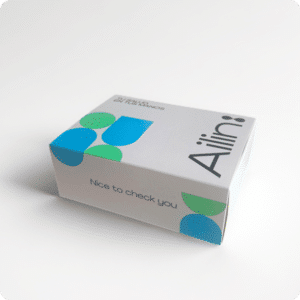
Unexplained digestive discomfort? The digestive pack consists of three hydrogen and exhaled methane tests to check if your body is digesting these sugars correctly and if there is bacterial overgrowth in the small intestine. A complete way to understand what is behind symptoms such as heaviness, gas, or diarrhoea.
142,00 € El precio original era: 142,00 €.99,00 €El precio actual es: 99,00 €.
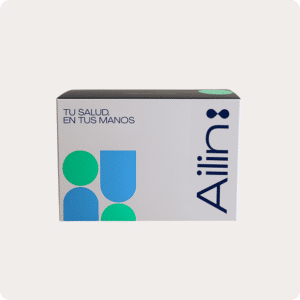
Do dairy products or certain fruits make you sick? This test detects intolerance to lactose and fructose, sugars found in dairy, fruit, honey and many processed foods. Ideal if you suspect that several foods make you sick and you want to confirm what is behind your digestive discomfort. Results in 7-10 days.
Find out if there's an intolerance behind your bloating, gas or discomfort
Stop eliminating foods by intuition and confirm what makes you sick
Understand why your digestion doesn't work as it should
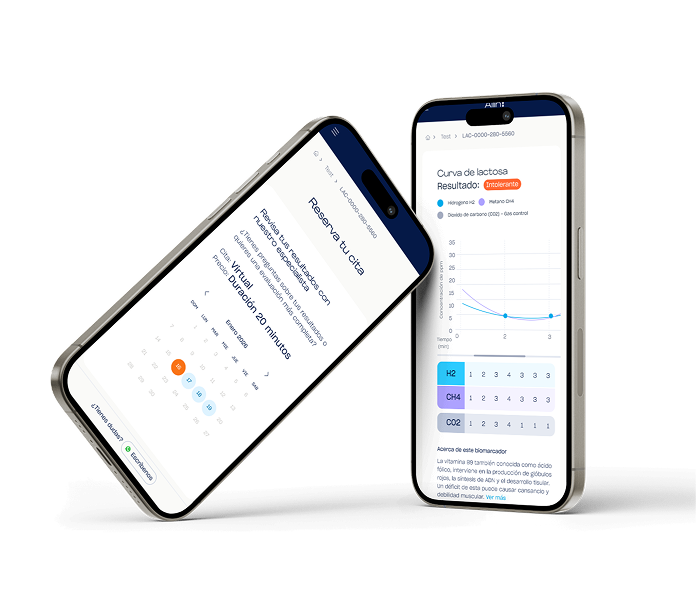
Results in 7-10 days including medical interpretation
The coeliac condition test does not require any special preparation. However, if you have symptoms consistent with coeliac condition (e.g. diarrhoea, constipation, bloating, abdominal discomfort, foul-smelling stools, gas, nausea or vomiting), you should continue to eat gluten-containing foods before taking the test. If you have previously eliminated gluten from your diet, it is possible that the results will be negative, so you should see your specialist doctor for a gluten re-exposure by consuming 8-10g/day of gluten for several weeks before repeating this test. If there is a high suspicion of a gluten-related disorder, you should see your medical specialist.
If you have already been diagnosed with CD by your doctor, it is advisable to monitor the level of anti-transglutaminase antibodies 3-6 months and 12 months after starting the gluten-free diet.
Coeliac disease is genetic in nature, has a high prevalence and is characterised by intolerance to gluten. Gluten is a protein that gives cohesiveness and the characteristic viscous and elastic texture to the dough of wheat, barley, rye, malt, semolina, oats, derivatives and variants. The ingestion of gluten causes lesions in the intestinal mucosa that result in digestive symptoms and may also present symptoms in other organs and systems (dermatitis herpetiformis, headache, tiredness, anaemia, osteoporosis, repeated miscarriages, etc.). Genetically predisposed individuals who develop the disease do not digest this protein, giving rise to protein fragments (prolamins), which are capable of activating the immune system and triggering symptoms. Non-coeliac gluten sensitivity presents symptoms very similar to coeliac disease but characteristically the antibodies are negative so the immune system does not intervene. Gluten and wheat allergy is also mediated by the immune system triggering a hypersensitivity reaction. Symptoms vary, and can cause oral itching, urticaria, lip oedema, difficulty breathing, etc.
According to the latest 2020 guidelines of the European Society of Paediatric Gastroenterology, Hepatology and Nutrition (ESPGHAN), children and adolescents can be diagnosed with coeliac disease without biopsy if they have IgA anti-transglutaminase antibodies (more sensitive) 10 times higher than normal or IgA anti-endomysial antibodies (more specific). It is not necessary to present symptoms or to request a genetic study (HLA DQ2/8) in this case. A negative serology with compatible symptoms does not exclude the diagnosis of coeliac disease. However, in the event of a positive serology, you should see your specialist doctor for a duodenal biopsy (or the accessory tests that your doctor deems appropriate) that will allow a definitive diagnosis to be made.
This test is indicated to initiate the diagnosis of CD as it measures the presence of the main antibodies that people with coeliac disease develop. Once a diagnosis has been made and a gluten-free diet has been started, it is more appropriate to test for immunogenic gliadin peptides in urine or faeces to evaluate the diet.
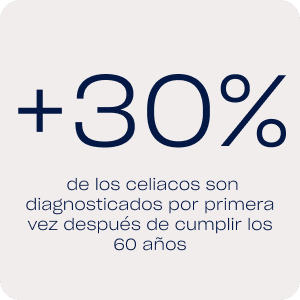
Screening for coeliac disease is based on the measurement of serum anti-transglutaminase IgA antibodies, as this provides a high sensitivity (true positive rate). If there is a selective IgA deficiency, which is 20 times more frequent in coeliacs, IgG class antibodies (anti-transglutaminase, anti-endomysial or anti-gliadin deamidated peptides) will be assessed. In turn, this deficit must be confirmed with the rest of the immunoglobulins. According to the Spanish Society of Digestive Pathology, around 78% of the population is not yet diagnosed with coeliac disease, which means 1 in 357 adults in Spain and 1 in 71 children. Given its high prevalence and under-diagnosis, early detection is necessary.
"Convenience, speed and professionalism"."
"Very clear and with steps to follow"."
"Very fast and professional"."
"Simplicity and speed"."
"Convenience, speed and professionalism"."
"Very clear and with steps to follow"."
"Very fast and professional"."
"Simplicity and speed"."
"Convenience, speed and professionalism"."
"Very clear and with steps to follow"."
"Very fast and professional"."
"Simplicity and speed"."
"Convenience, speed and professionalism"."
"Very clear and with steps to follow"."
"Very fast and professional"."
"Simplicity and speed"."
"Convenience, speed and professionalism"."
"Very clear and with steps to follow"."
"Very fast and professional"."
"Simplicity and speed"."
"Convenience, speed and professionalism"."
"Very clear and with steps to follow"."
"Very fast and professional"."
"Simplicity and speed"."
"Convenience, speed and professionalism"."
"Very clear and with steps to follow"."
"Very fast and professional"."
"Simplicity and speed"."
"Convenience, speed and professionalism"."
"Very clear and with steps to follow"."
"Very fast and professional"."
"Simplicity and speed"."
"Convenience, speed and professionalism"."
"Very clear and with steps to follow"."
"Very fast and professional"."
"Simplicity and speed"."
"Convenience, speed and professionalism"."
"Very clear and with steps to follow"."
"Very fast and professional"."
"Simplicity and speed"."
92,00 € El precio original era: 92,00 €.59,00 €El precio actual es: 59,00 €.
69,99 € — or subscribe to save up to 10%
69,99 € — or subscribe to save up to 10%
.